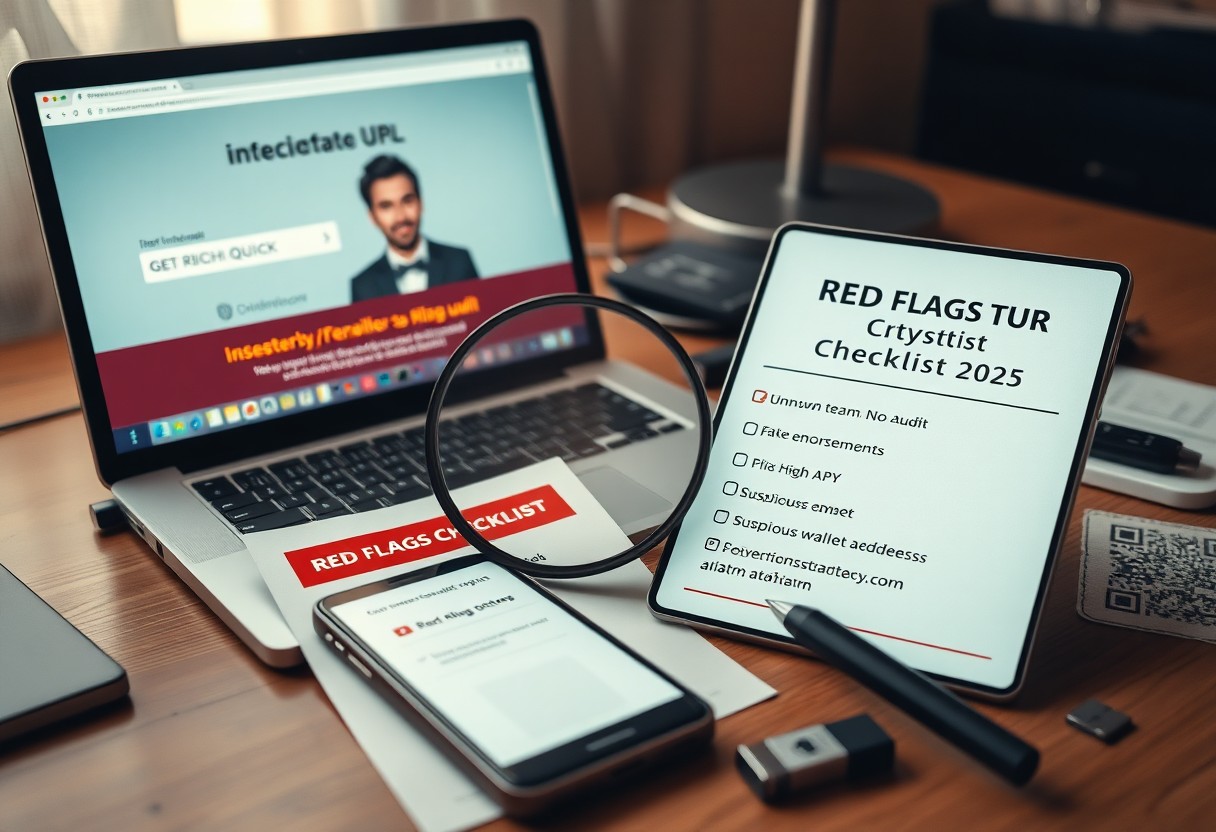

Most crypto scams rely on urgency and false trust to steal your money. If an investment promises guaranteed high returns with no risk, it’s almost certainly a scam. Watch for anonymous teams, unverified websites, and pressure to act fast-these are dangerous red flags. You have the power to protect your savings by recognizing these signs early.
Analyzing Essential Risk Factors in New Crypto Projects
Every new crypto project carries inherent risks, but transparency and feasibility separate legitimate ventures from potential scams. You must scrutinize the project’s foundation before committing funds. Perceiving
- the presence of a detailed, technically sound whitepaper
- a realistic, time-bound roadmap
- verifiable team identities with relevant experience
Evaluating whitepaper transparency and roadmap feasibility
A clear whitepaper explains the problem, solution, and technology without excessive jargon. Look for specific milestones, timelines, and technical depth. Vague promises or missing code references are warning signs. Perceiving
Delays without explanation or overly ambitious goals in the roadmap suggest poor planning. A credible project updates progress publicly and adjusts timelines honestly. Perceiving
Identifying red flags in developer anonymity and team history
Anonymous teams increase the risk of exit scams, especially if no LinkedIn profiles or past projects exist. Real developers stand behind their work. Perceiving
Profiles with fake histories or stock photos often hide fraudulent intent. Check GitHub activity and past contributions. Perceiving
Projects with no doxxed founders rarely survive long-term scrutiny. When team members refuse accountability, their motives are questionable. Perceiving developer credibility as a core indicator protects your investment from irreversible loss.
How-to Perform a Basic Technical Audit of Smart Contracts
Smart contract transparency is your first line of defense. Always demand access to the verified source code on block explorers like Etherscan or BscScan-unverified code is a major red flag.
You don’t need to be a developer to spot danger. Simple tools like RugDoc or TokenSniffer can analyze contract risks, but never skip checking for basic security practices like renounced ownership.
Verifying liquidity locks and ownership renouncement
Liquidity locks prevent developers from pulling funds. Use platforms like Team Finance or Unicrypt to confirm if liquidity is locked-and for how long. Short lock periods or no lock at all mean extreme risk.
Renounced ownership means creators can’t alter the contract. Check the contract’s “Ownership” section on Etherscan-if it’s still owned, the team can change rules anytime.
Detecting hidden “mint” functions and high sell taxes
Hidden mint functions let developers create unlimited tokens. Search the contract code for “mint” or “_mint” functions. If present, they can inflate supply and crash your investment.
High sell taxes drain your profits. Look for “sellFee” or “tax” in the code. Fees above 10% are predatory-they enrich insiders while limiting your exit.
Hidden mint functions are especially dangerous because they’re often disguised as legitimate features. Even if a project looks promising, a single unchecked mint function can allow insiders to dump millions of new tokens, instantly devaluing yours. Always verify the contract has no active minting capability post-launch.
Recognizing Social Engineering and Psychological Traps
Scammers often exploit your emotions to bypass rational thinking. They create false trust through fake relationships or urgent scenarios designed to pressure you into acting fast. Any unsolicited contact pushing crypto investments should raise immediate suspicion. These tactics prey on loneliness, greed, or fear-emotions that cloud judgment.
You’re more vulnerable when you feel isolated or financially stressed. Fraudsters study human behavior and use it against you with precision. Emotional manipulation is their primary tool, not technology. Stay alert when someone pushes secrecy or discourages independent verification.
Spotting “pig butchering” schemes and unsolicited investment DMs
A stranger messages you on social media, building rapport before suggesting a “lucrative” crypto opportunity. This slow-burn deception is known as “pig butchering”-a scam where trust is cultivated only to be exploited. The relationship feels real, but every word is scripted.
You might receive direct messages from seemingly genuine users promoting private groups or trading platforms. No legitimate investor will cold-DM you with guaranteed returns. Delete such messages immediately-engaging can lead to total financial loss.
Analyzing FOMO-driven marketing and fake celebrity endorsements
Ads scream “Join the revolution!” while flashing images of luxury cars and stacks of cash. These visuals are engineered to trigger FOMO-fear of missing out. Scammers use urgency, claiming “limited spots” or “prices doubling tomorrow,” to rush your decision.
You may see edited videos of famous figures “endorsing” a coin. No verified celebrity publicly backs anonymous crypto projects. Cross-check claims through official channels-most endorsements are deepfakes or stolen clips designed to deceive.
Fake scarcity and artificial hype distort reality. Projects may claim partnerships with major companies or exchanges that don’t exist. The most dangerous scams look professional and come with fake testimonials. Always verify claims independently-don’t let manufactured excitement override caution.
Professional Tips for Securing Your Private Keys
Protecting your private keys is the foundation of crypto safety. Never share them, store them in plain text, or enter them on suspicious websites. Use trusted tools and disciplined habits to keep control of your assets.
- Always store your private keys offline using secure methods
- Enable two-factor authentication on all related accounts
- Use strong, unique passwords for wallet access
- Regularly audit devices for malware that targets crypto wallets
After choosing the right protection strategy, long-term security becomes far more predictable and within your control.
Implementing hardware wallets and cold storage solutions
Hardware wallets keep your private keys physically offline, shielding them from online threats. These devices only sign transactions internally, never exposing keys to potentially compromised systems.
After connecting to a dApp or exchange, the device verifies and approves actions without releasing sensitive data.
Managing decentralized application (dApp) permissions
dApp access to your wallet can expose you to hidden risks if left unchecked. Always review and limit the permissions you grant, especially spending allowances on tokens.
After authorizing a dApp, it may retain access indefinitely unless manually revoked through your wallet settings.
Every time you connect your wallet to a new dApp, you’re potentially giving it ongoing rights to your funds. Some malicious apps request excessive token allowances, allowing them to drain balances if exploited. Regularly check and revoke unused permissions through wallet tools like Revoke.cash or built-in dashboards to maintain tight control over your assets.
How-to Vet Exchange and Platform Authenticity
You must verify an exchange’s legitimacy before depositing funds. Start by confirming whether the platform publicly shares proof of reserves from a reputable auditing firm. This transparency ensures your assets are backed and not being misused.
Regulatory oversight adds another layer of protection. Look for clear evidence of regulatory licensing from authorities like the SEC, FCA, or MAS. Platforms operating without oversight pose a high risk of fraud or collapse.
Checking for proof of reserves and regulatory licensing
Proof of reserves confirms that an exchange holds enough assets to cover user balances. Choose platforms that publish regular, third-party-verified audits. The absence of this proof is a major red flag.
Licensing from a recognized financial regulator means the platform follows strict rules. If you can’t find a license number or it’s from a questionable jurisdiction, your funds may not be protected.
Researching domain age and phishing URL variations
Domain age can reveal how long a platform has operated. Use tools like WHOIS to check registration dates-new domains linked to big-name exchanges are likely scams.
Scammers often register URLs with slight misspellings, like “binance-pro.com” instead of the real site. Always double-check the address bar. A single wrong letter could send you to a phishing trap.
Phishing sites mimic legitimate platforms but steal your login details. Older domains with consistent registration history are more trustworthy. If the URL looks off or the site loads oddly, close it immediately-your wallet’s safety depends on it.
Summing up
From above, you now know the clear signs of a crypto scam. Unrealistic returns, anonymous teams, and pressure to act fast are all signals to walk away. You hold the power to protect your savings by questioning claims and verifying sources.
You don’t need insider knowledge-just caution and awareness. If something feels off, it probably is. Trust verified platforms, demand transparency, and never invest based on emotion or hype.