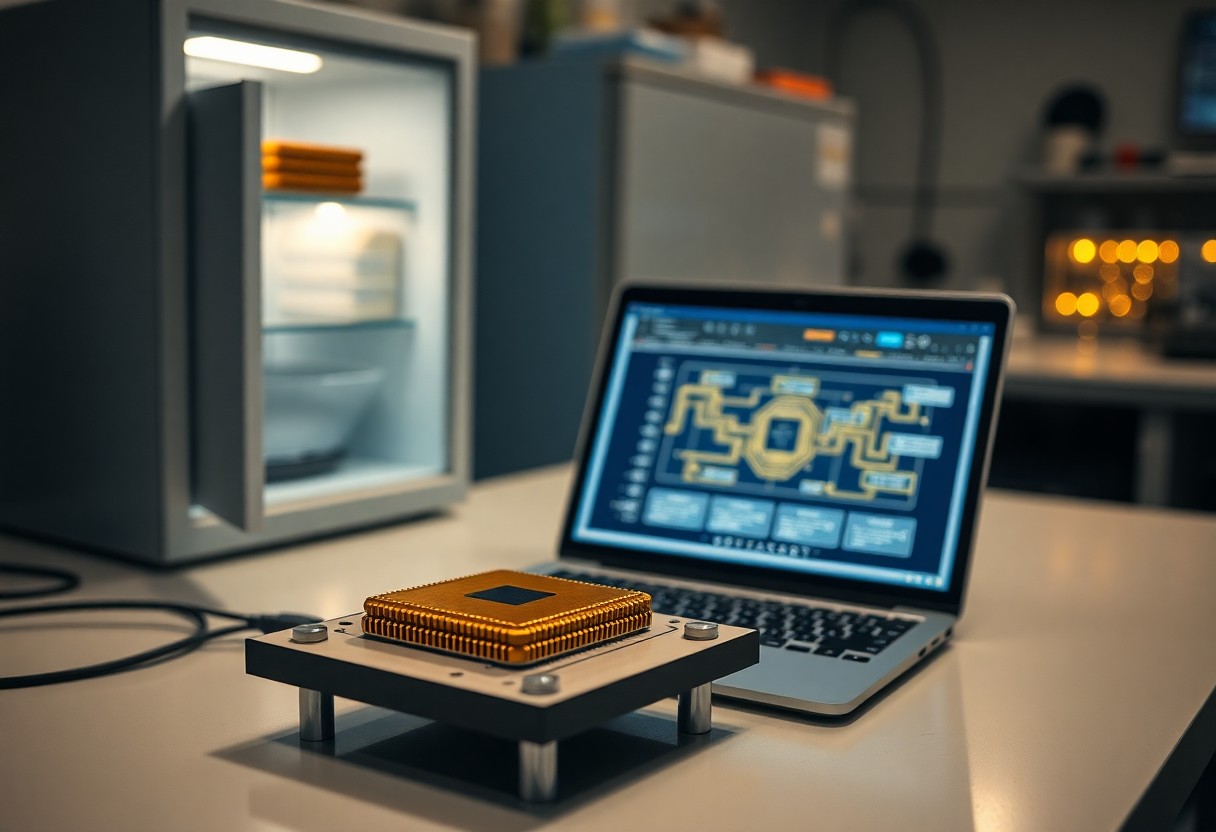

There’s a new kind of computer emerging that doesn’t just calculate faster-it solves problems today’s machines can’t touch. You’ll feel its impact in medicine, finance, and security within five years. Some advances could break current encryption, making your data dangerously exposed, while others may unlock life-saving treatments and ultra-efficient energy systems.
The Magic of the Spinning Coin
Imagine flipping a coin and not waiting for it to land. While it spins, it’s neither heads nor tails but holds the possibility of both. That spinning state is the closest everyday image you have to a quantum bit, or qubit. This in-between state is where quantum computing begins to outpace classical machines.
The Myth of the Simple Binary
You’ve been taught computers work in 0s and 1s-clean, predictable states. But that model limits what machines can solve efficiently. Quantum systems reject this either/or logic, allowing far more complexity in each calculation. Your current phone relies on strict binary switches; quantum devices do not.
The Power of Simultaneous Existence
Each qubit can represent multiple states at once, thanks to superposition. When you link several qubits, their combined states grow exponentially. This means a 300-qubit machine could process more combinations than there are atoms in the known universe. Problems once thought unsolvable may fall within reach.
Superposition isn’t just theoretical-it’s been demonstrated in labs worldwide. You’ll see its impact first in drug discovery and logistics, where exploring countless options at once saves years. Within five years, industries you interact with daily will quietly rely on quantum-powered solutions. You won’t see the machine, but you’ll feel the speed.
The Tipping Point of Computation
Something has shifted beneath the surface of modern technology. Your phone, laptop, and cloud services can’t keep accelerating at the pace they once did. Silicon-based chips are hitting physical limits-we can’t shrink transistors much further. This slowdown affects everything from drug discovery to financial modeling.
Progress in computing no longer comes from raw speed alone. You’re already feeling the strain when AI tools stall or complex problems take hours to solve. The old rules no longer apply. A new kind of machine is stepping in where traditional systems fail.
Why Traditional Systems Reached a Limit
Electrons moving through tiny circuits generate heat and interference. As engineers packed more transistors onto chips, these effects became unmanageable barriers. Doubling power doesn’t double results anymore-it risks melting the hardware. You’ve seen this in devices that throttle performance when overheated.
Physics itself draws a line. At atomic scales, classical mechanics break down. Transistors now approach sizes where electrons tunnel unpredictably, corrupting data. No engineering trick can bypass this. The foundation of your current devices has reached its edge.
The Leap into Multidimensional Math
Qubits don’t just store 0s or 1s-they exist in combinations of both. This lets quantum computers process vast possibilities at once. You’re not just adding speed; you’re unlocking entirely new ways to calculate. Problems once deemed unsolvable may fall in minutes.
Imagine exploring every route in a maze simultaneously instead of one by one. That’s the shift. Quantum systems use superposition and entanglement to navigate complex, multidimensional spaces. Your data, encrypted or simulated, will never look the same.
Superposition allows a qubit to hold multiple states at once, while entanglement links qubits so that one instantly influences another, no matter the distance. This isn’t just faster math-it’s a fundamental redefinition of computation. You’ll rely on these systems for tasks like optimizing global supply chains or simulating molecular behavior for new medicines. The leap isn’t incremental; it’s exponential.
The Molecular Revolution
You’re already surrounded by molecules engineered for specific jobs-medicines, materials, fertilizers. Today’s computers struggle to simulate even simple molecular behavior. Quantum computers will change that, letting scientists model atomic interactions with unmatched accuracy. This shift won’t just improve existing products-it will unlock entirely new forms of matter designed from the ground up.
Designing Nature with Precision
Imagine building materials atom by atom to be stronger, lighter, or self-repairing. Quantum simulations let engineers design molecules with exact properties, skipping years of lab guessing. You’ll see this in everything-from ultra-efficient solar panels to biodegradable plastics that perform like steel.
The End of Trial and Error Medicine
Drugs today fail because they’re tested on average bodies, not yours. Quantum computing enables simulations of how compounds interact with your unique biology. You could receive treatments designed specifically for your genetic makeup, slashing side effects and boosting effectiveness from the first dose.
Right now, 90% of drug candidates fail in clinical trials due to unexpected reactions. With quantum-powered modeling, researchers can predict how a molecule behaves in a human cell before it’s ever synthesized. You’ll benefit from faster approvals, lower costs, and medicines that work the first time, ending decades of medical guesswork.
The Great Digital Security Reset
Quantum computers will crack today’s encryption like glass under pressure. Your current digital locks won’t survive-from bank logins to private messages. A global shift is already underway to protect what you value most online.
Why Current Passwords Will Fail
Encryption that keeps your data safe relies on math problems too hard for regular computers. Quantum machines can solve these in seconds, making today’s passwords and keys useless. What protects your identity now will offer no shield soon.
Building the Unbreakable Connection
Scientists are designing quantum-safe cryptography based on problems even quantum computers can’t solve. These new systems will guard your data in a post-quantum world. You’ll use them without knowing-like HTTPS today, but stronger.
One promising method uses lattice-based math, where breaking the code means solving puzzles with thousands of variables. No known quantum algorithm can efficiently crack them. This isn’t just theory-governments and tech giants are already testing these defenses in real networks.
The Five Year Forecast
Change is coming faster than most expect. Within five years, quantum computing will shift from experimental labs to real-world tools that affect your daily life. You’ll see its impact in faster drug development, stronger encryption, and smarter AI systems.
Businesses will rely on quantum-powered simulations to solve problems classical computers can’t handle. This shift won’t replace your laptop, but it will reshape services you use every day. Security, healthcare, and finance will feel the most immediate effects.
From Laboratory to Living Room
Right now, quantum machines fill entire rooms and need extreme cooling. Soon, cloud-based access will let companies and developers use them remotely. You won’t own a quantum computer, but you’ll use one through apps and online platforms.
Major tech firms are already building hybrid systems that combine classical and quantum processing. These systems will quietly power backend operations, improving speed and accuracy without you noticing the switch.
The New Daily Reality
Your online security will depend on quantum-resistant encryption. Without it, personal data would be exposed to new threats. Quantum computers can break today’s codes, making this upgrade crucial for privacy.
Medical advances will accelerate as researchers simulate complex molecules. You might benefit from personalized treatments designed using quantum insights, cutting years off development timelines.
Imagine receiving a life-saving drug five years earlier because scientists used quantum computing to model its effects accurately. That’s not science fiction-it’s a likely outcome as these systems mature. The biggest change won’t be what you see, but how much faster solutions reach you.
The Global Power Shift
Power is already shifting as nations race to control quantum technology. Whoever leads will shape global security, finance, and innovation for decades. Encryption systems protecting your data today could collapse overnight if a rival unlocks quantum codebreaking first.
China and the U.S. are pouring billions into research, treating quantum dominance like a new space race. This isn’t just about science-it’s about who sets the rules when quantum machines redefine what’s possible.
Winners of the Quantum Race
You’ll feel the impact when early quantum adopters gain unbreakable encryption and ultra-fast drug discovery. Countries and companies that master this tech will dominate industries from energy to defense. They’ll detect diseases earlier, optimize supply chains, and outpace competitors with solutions once thought impossible.
These leaders won’t just innovate-they’ll control the platforms future economies rely on. Your digital life, health records, and financial systems may depend on infrastructure built by today’s quantum frontrunners.
The Cost of the Slow Start
Delaying investment leaves entire economies exposed. If your country lags, foreign powers could crack encrypted communications, threatening national security and personal privacy. Outdated systems will be vulnerable to quantum attacks within five years.
Industries slow to adapt risk obsolescence. Banks, hospitals, and tech firms behind in quantum readiness may face breaches or lose market share to agile, forward-thinking rivals.
Waiting too long means playing catch-up in a race where the finish line reshapes global influence. Legacy systems not upgraded for quantum threats could expose your data to decryption by hostile actors. Once quantum hackers break through, there’s no undo button-your messages, transactions, and identities could be harvested in seconds.
Final Words
You already live in a world shaped by invisible technology-quantum computing will be the next invisible force. In five years, it won’t feel like science fiction; it will quietly improve medicine, strengthen security, and speed up solutions to problems once thought unsolvable. You won’t need to understand the physics, but you will benefit from its impact.